
TV advertising is no longer tied to strict prime time hours or rigid schedules. Today, brands move between two different worlds: Linear TV and Connected TV. They look similar at first glance. Same big screen in the living room. But under the surface, everything changes. From how ads are delivered to how audiences are reached and results are measured.
This article breaks down the real difference between Linear TV vs Connected TV. In simple terms. Without jargon. Think of it like this. One option runs on a fixed track. The other adjusts every turn as you go. In this article, we break down how each format delivers ads, who they truly work for, and why more advertising budgets are steadily moving toward CTV.

Understanding Linear TV advertising
Before comparing linear vs CTV it helps to understand how traditional television actually works. Linear TV set the rules for advertising long before digital formats appeared. It shaped viewing habits, pricing models, and media planning logic. Even now, this is where many campaigns begin. So let’s slow it down and look at what linear TV really is, how ads appear on it, and who is still watching.
Read more about programmatic CTV advertising.
Traditional broadcasting explained
Linear TV follows a simple idea. One channel. One timeline. Content is broadcast to everyone at the same moment. Ads appear during scheduled breaks and cannot be skipped. It feels familiar and stable. Like turning on the TV and letting the evening unfold for you.
How linear TV scheduling works
Programming runs on a fixed schedule created by broadcasters. Advertisers buy time slots based on predicted reach and ratings. Once a campaign is booked, flexibility is limited. You cannot pause or adapt on the fly. It moves steadily, like a clock that never waits.
Who still watches linear TV?
Linear TV is still the go to choice for older audiences and households where watching TV follows a familiar daily rhythm. Live sports, news, and national events still draw large audiences. When brands need fast, broad visibility, linear TV continues to deliver shared attention at scale.
Understanding connected TV advertising
Connected TV feels like a natural evolution of traditional TV. The screen hasn’t changed, but everything behind it works in a completely new way. CTV combines the comfort of television with the flexibility of digital. Viewers choose what to watch and when. Advertisers get more control, more data, and clearer results. Here is how it works.
How CTV delivers content via the internet
When comparing connected TV vs linear TV, CTV streams content through the internet, not cable or satellite. Apps replace channels. Platforms replace schedules. Viewers press play when it suits them. Ads are served dynamically, based on data and context. It feels less like broadcasting and more like a conversation.
Devices used for CTV
CTV lives on smart TVs and familiar streaming devices like Roku or Amazon Fire TV that people already use every day. Game consoles also play a role. Even one screen can turn into many entry points. The TV stays in the living room, but the technology behind it becomes much smarter.
Why viewers are moving toward CTV
People want control. Over time, content choice matters more than schedules. CTV fits modern habits. Binge watching, on demand shows, and fewer interruptions. It adapts to life instead of asking viewers to adapt to it.
Read more about ads or subscription on CTV.

Key differences between CTV vs Linear TV
At first glance, CTV vs linear look almost identical. Same screen. Same couch. Same evening routine. But behind the scenes, they follow very different rules. One is built on broadcast logic. The other runs on data and choice. Let’s look at where they truly diverge.
Content delivery
Linear TV sends content through traditional broadcast signals. Everyone receives the same stream at the same time. CTV delivers content via the internet. Streaming replaces channels. Viewers decide when to press play, not the broadcaster.
Viewing experience and user control
With Linear TV, the viewer adapts to the schedule. With CTV, the schedule adapts to the viewer. Content can be paused, restarted, or continued later. It feels less like waiting and more like choosing.
Audience targeting capabilities
Linear TV targets broad groups based on time slots and ratings. CTV allows precise audience targeting using data. Age, interests, location, and behavior come into play. Instead of shouting to a crowd, brands can speak to the right people.
Measurement and attribution
Linear TV relies on estimated reach and panels. Results are often delayed and generalized. CTV offers digital style measurement. Impressions, completion rates, and performance data are available faster and with more clarity.
Ad formats and personalization
Linear TV mostly sticks to standard video ads. Same message for everyone. CTV opens the door to personalized creatives and dynamic ad delivery. The message can change based on who is watching.
Costs for advertisers
Linear TV often requires larger budgets and long term commitments. Entry barriers are higher. CTV is more flexible. Advertisers can start smaller, test faster, and adjust spend as campaigns evolve.
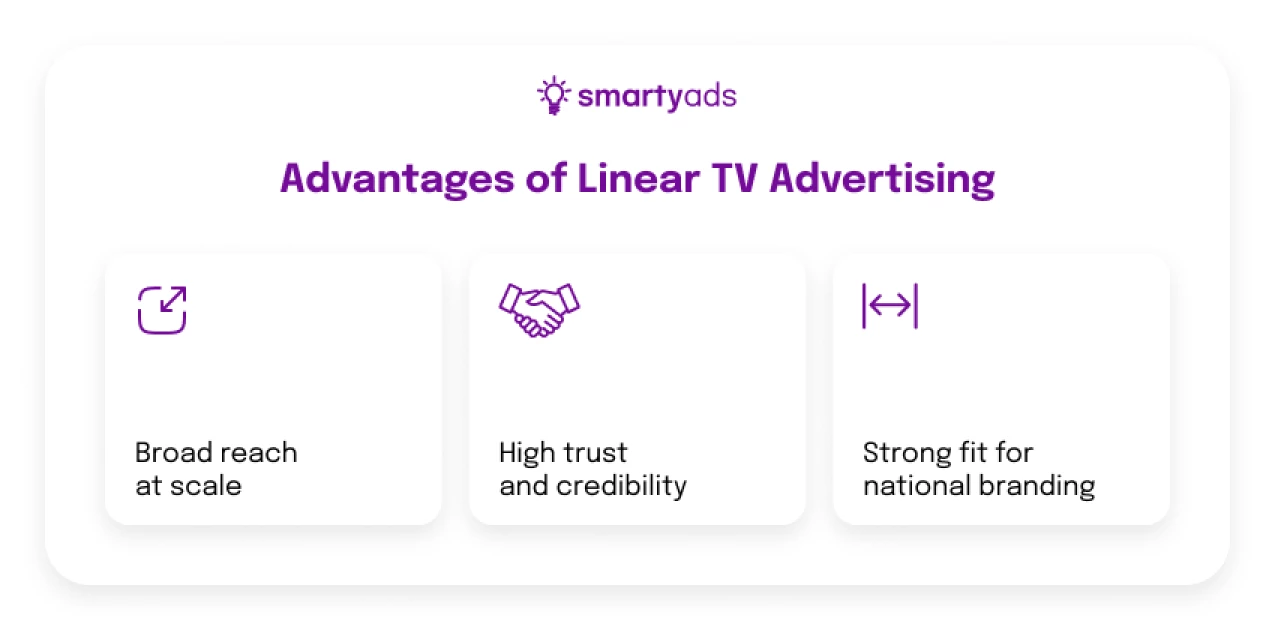
Advantages of linear TV advertising
Linear TV may feel old school, but it still has strong cards to play. For certain goals, it remains a powerful channel. Especially when scale and shared attention matter more than precision.
Broad reach at scale
Linear TV reaches millions at once. One ad can appear in living rooms across the country in the same moment. For mass visibility, few channels move that fast or that wide.
High trust and credibility
Many viewers still trust traditional television. Ads shown during news, sports, or prime time shows feel more established. Being on TV often signals size, stability, and brand confidence.
Strong fit for national branding
Linear TV works best for big messages and big moments. Product launches, seasonal campaigns, and national branding efforts benefit from its reach. It creates a shared experience that digital channels rarely replicate.
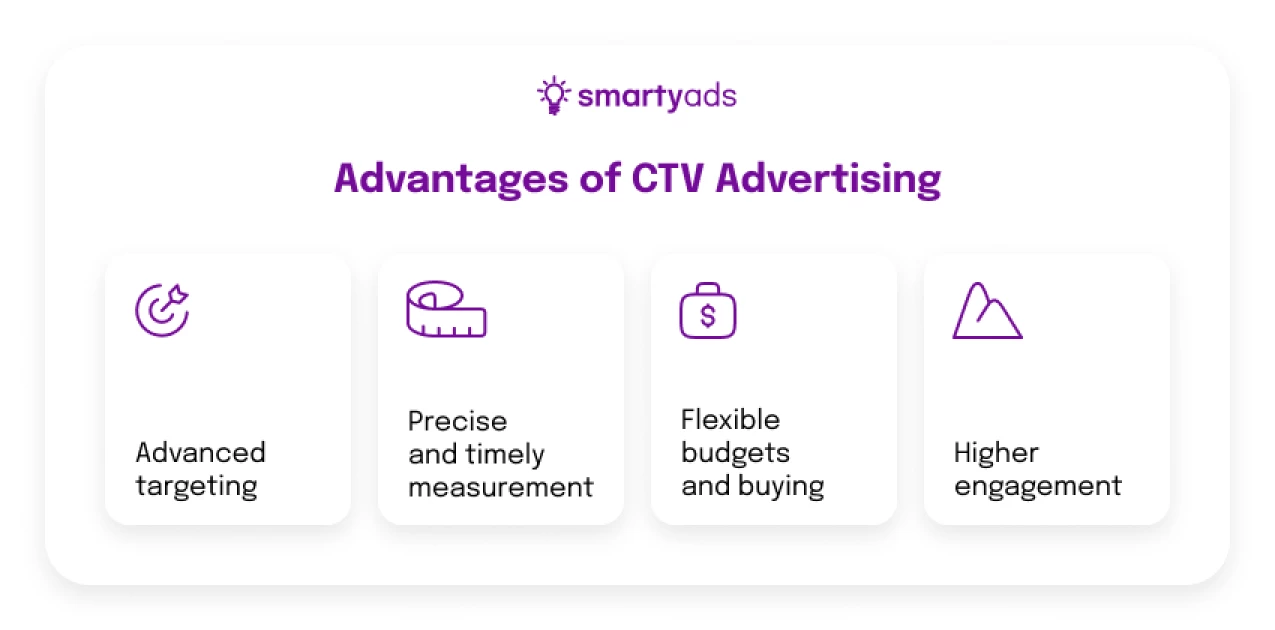
Advantages of CTV advertising
CTV is where television meets modern advertising logic. It keeps the big screen impact but adds control, data, and flexibility. For many brands, this mix is hard to ignore.
Advanced targeting
CTV relies on data to reach the right people. Ads are shown based on interests, location, and how viewers actually watch content. Instead of spraying messages everywhere, brands can aim with intention and spend smarter.
Precise and timely measurement
Results don’t stay hidden for weeks. Performance shows up almost in real time. Advertisers can see impressions, completion rates, and engagement as they happen, then tweak the campaign while it’s still running.
Flexible budgets and buying
CTV does not demand massive upfront spend. Campaigns can start small, scale gradually, and adjust quickly. It feels more like steering than committing to a fixed route.
Higher engagement
CTV ads often feel more relevant. Some formats allow interaction or personalized messages. When ads match what people care about, they are more likely to be noticed, not just played in the background.
Linear TV vs CTV advertising: which one should businesses choose?
There’s no universal answer. It all comes down to your goals, your budget, and how fast you need results. For most brands, it’s not a question of choosing sides. It’s about understanding when each option works best.
When linear TV makes sense
Linear TV works well for large scale awareness. If your goal is to be seen everywhere at once, it delivers. National launches, seasonal pushes, and brand building campaigns often benefit from its reach and authority.
When CTV delivers better ROI
CTV shines when performance matters. Targeting is sharper. Measurement is clearer. Budgets are easier to control. If you want to test, optimize, and connect ads to real outcomes, CTV usually brings stronger returns.
Why many brands choose both
More brands now combine both CTV vs linear TV advertising. Linear builds presence. CTV adds precision and action. Together, they work like a strong first impression followed by a meaningful conversation.
Final thoughts
Connected TV vs linear TV advertising are not rivals. They are tools with different strengths. Linear TV brings scale, familiarity, and shared attention. CTV adds control, data, and speed. The smartest strategies understand both and use them with intention. Like choosing the right gear before a long road, the channel matters as much as the destination.
If you want to turn CTV into a measurable growth channel, our DSP is built for that. Reach premium inventory, fine tune targeting, and see performance clearly. In case you are also looking for a reliable in game advertising network, be sure to contact us.
Explore SmartyAds DSP and start building TV campaigns that actually move the needle.

FAQ
Yes, linear TV vs CTV is still relevant for advertising, especially when you need fast, mass reach. It works well for big brand moments and nationwide campaigns. But it’s like a billboard on a highway. You get visibility, not precision. That’s why many brands now balance Linear TV with CTV.
Absolutely. Many advertisers combine CTV vs Linear TV in one strategy. Linear TV builds awareness at scale. CTV adds targeting, flexibility, and measurement. Together, they work like a wide net and a sharp hook. This mix helps brands stay visible and relevant at every stage of the funnel.
Linear TV can support conversions, but indirectly. It drives recognition and trust, not instant clicks. Think of it as planting a seed. CTV advertising, on the other hand, is built for action. With better targeting and attribution, it’s easier to connect impressions to real results and optimize campaigns faster.