CTV advertising trends illustrate one fact that is not surprising – now it is no longer a new channel, it is a full-fledged branding mechanism that advertisers use along with tools for ad automation (like demand-side platform from SmartyAds). More so, if previously we could expect only branding impacts, now CTV is turning performance-driven and measurable.
Even though media costs are rising, budgets are under scrutiny, and regulations are tightening, this channel is evolving. Brands stopped asking “how many people saw my ad?”, but are curious about “what results did my CTV ad drive?”. Today it is expected to connect directly to actions like installs, purchases, and conversions.
Also, what is CTV advertising -- read our previous articles about them. As well, you can find out about linear TV vs CTV differences in our previous materials.
Key takeaways:
- CTV is no longer just a branding channel — it's now a performance-driven medium, now it is also measured by installs and actions rather than just views.
- AI automation is running campaigns. Thanks to innovative tech adjusting targeting, optimizing budgets, and rotating creatives in real time becomes possible.
- Attribution and attention metrics are replacing blind impression counting, letting advertisers partially track TV-to-mobile conversion paths (though measurement is still fragmented across platforms).
- Multiscreen behavior is the default. People can watch CTV on big screen TVs and through smart boxes, on mobile or desktop, making CTV the "first trigger" rather than the final step.
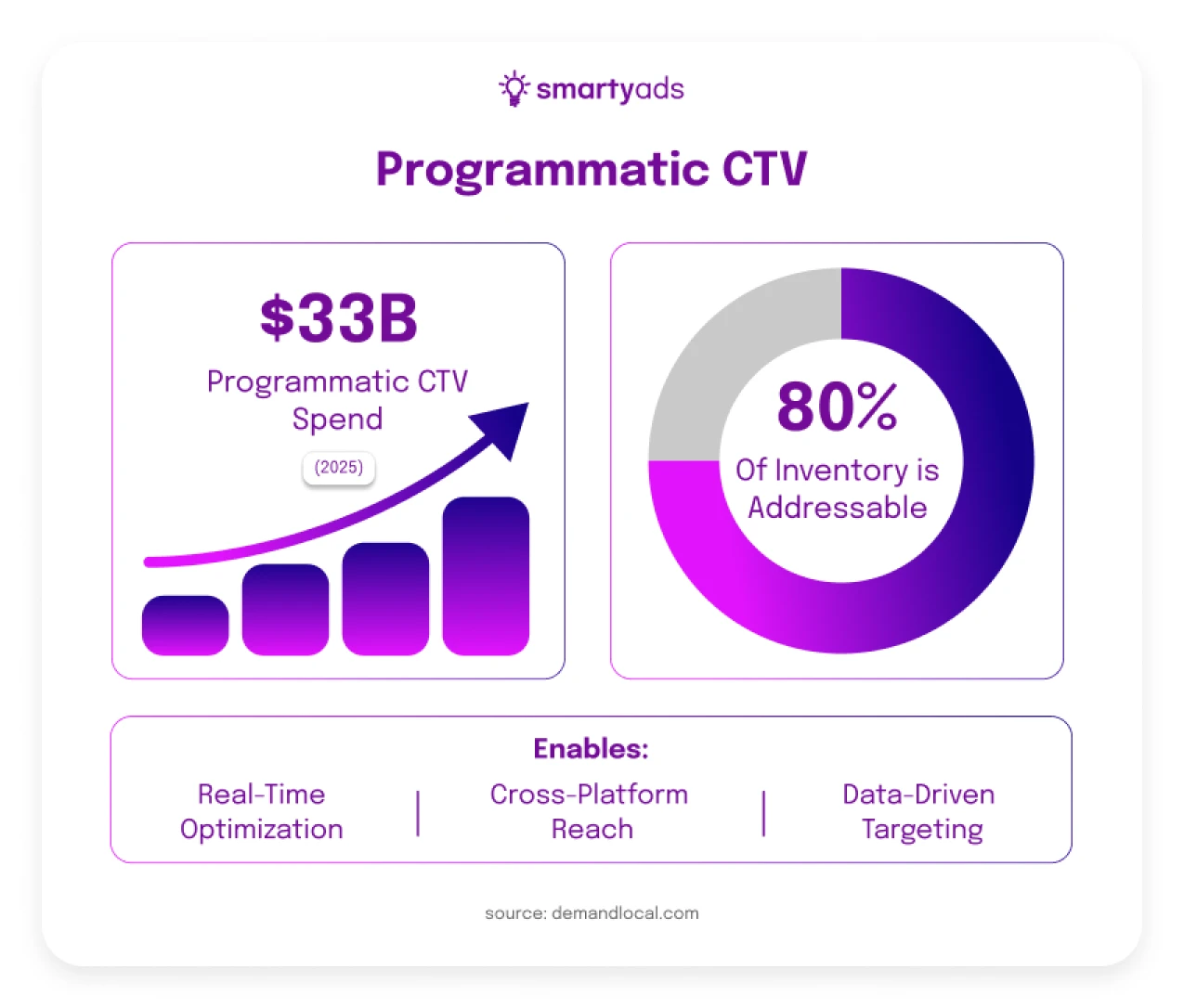
- Programmatic drives ~80% of CTV ad spend, with DSPs, SSPs, and DMPs enabling automated buying across platforms and verticals (retail, finance, gaming, telecom).
- Interactive formats are rising. Most popular now are QR codes, clickable overlays, and shoppable video shorten the path from viewing to action.
Main CTV advertising trends
The main connected TV advertising trends are shaped by three big shifts: AI automation, performance measurement, and cross-device behavior.
AI turns CTV into an automated system
AI is changing how campaigns are run on a very practical level.
Instead of manually managing campaigns, advertisers now rely on systems that:
- Adjust targeting automatically
- Optimize budgets in real time
- Test and rotate creatives
- React to user behavior instantly
From recent market shifts, companies are also building “AI agents” that can manage campaign workflows almost like digital employees. Manual work shrinks and optimization increases.
But there’s another important point: computing power is becoming a limited resource. As AI usage grows, companies are starting to operate within “compute budgets”, which affects how much automation they can run at scale.
So, connected TV is changing its approach. It is not just becoming smarter — it is becoming system-driven and resource-aware.
CTV becomes a performance channel
CTV is moving away from pure reach metrics. Trends in CTV advertising will be wrapped around them.
Advertisers increasingly evaluate campaigns through:
- CAC (customer acquisition cost)
- ROAS (return on ad spend)
- Installs and conversions
- Post-view actions
This shift is supported by better attribution tools that can finally connect TV exposure with mobile or desktop actions. For example, a user sees an ad on TV and later installs an app on mobile — and that path can now be partially tracked.
However, measurement is still not fully unified. Different platforms define impressions and exposure differently, which makes cross-platform comparison difficult. It is hard to correctly target and segment the audience.
In these realms attention metrics is what comes to surface first. Platforms say no to blind impression counting and pay attention to such indicators like – for how long users actually get fixated on content.
Multiscreen behavior is now the default
People no longer interact with screens in isolation.
A typical journey now looks like this:
- Ad seen on Smart TV
- Phone is used at the same time
- Action happens on mobile or desktop
CTV often works as the first trigger, not the final step.
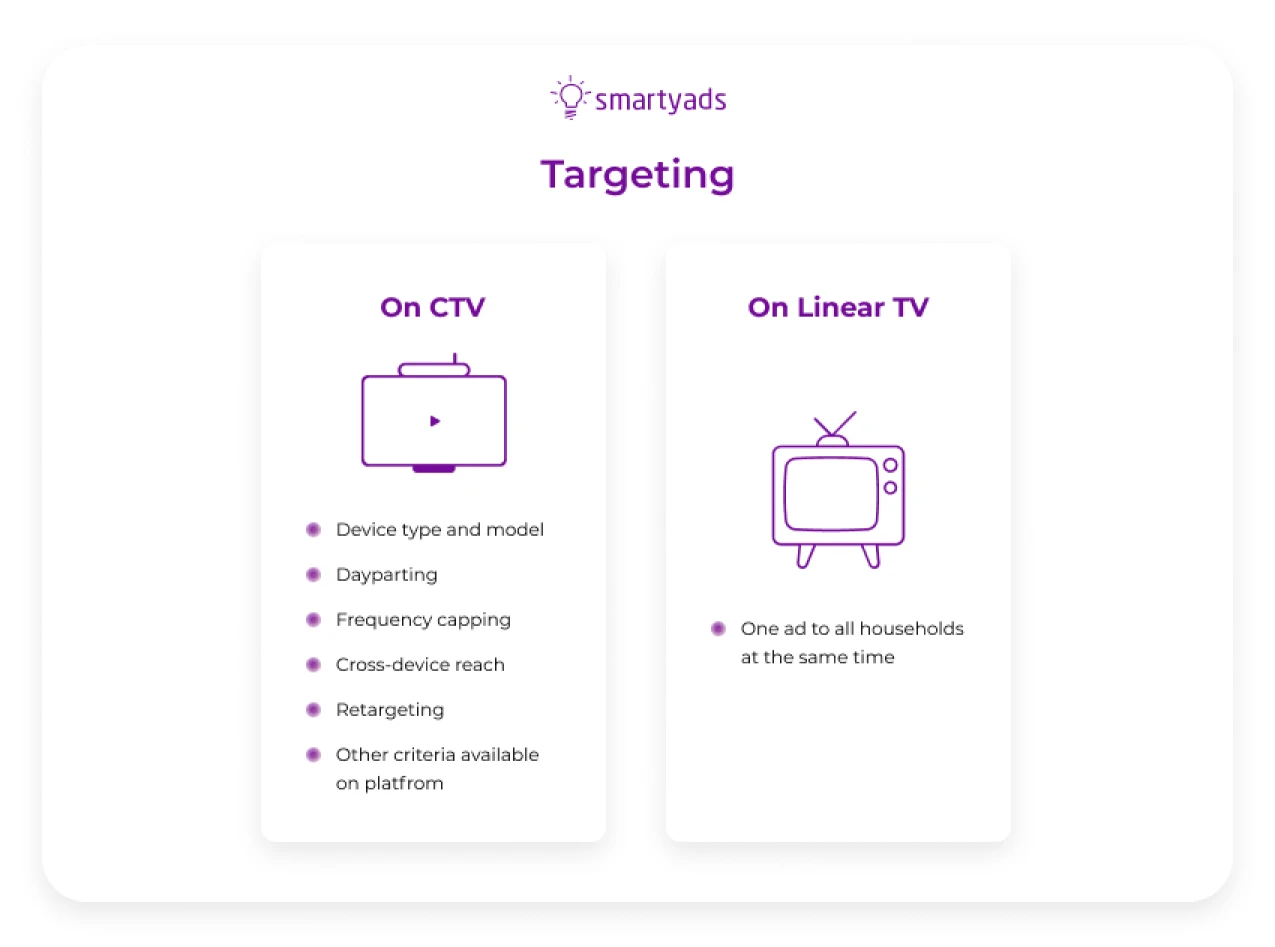
This is especially important because attention is now fragmented across devices. Users move between screens constantly, so campaigns need to target that behavior instead of treating TV as a standalone channel. Read more about the difference between linear TV vs CTV.
Programmatic advertising and CTV
Programmatic is the core infrastructure behind modern connected experiences. Without it, scaling campaigns across fragmented platforms would not be possible.
Key points:
- Programmatic is the main driver among CTV ads trends. It is the engine behind growth – it accounts for roughly 80% of ad spend.
- Automation allows advertisers to buy inventory across multiple platforms without manual negotiation.
DSPs, SSPs, DMPs, and ad exchanges as key pillars of programmatic allow media buyers and media sellers to transact immediately. These systems connect advertisers, publishers, and data sources into one ecosystem. - Campaigns are increasingly evaluated based on real actions like installs, purchases, and sign-ups.
Vertical-specific use cases: retail, finance, gaming, and telecom all use CTV differently depending on how fast users convert.
A key insight from market evolution is that data is concentrating in large ecosystems (retail media, telecom, banking). These players control both audience data and conversion paths, which makes them especially powerful in targeting.
| Approach | Best for | Main advantage | Limitation |
| Direct deals | Premium inventory | Direct publisher relationships | Limited scalability |
| Programmatic CTV | Scalable campaigns | Automated buying and targeting | Requires a programmatic platform |
| DSP-based CTV | Multi-platform campaigns | Targeting, bidding, and optimization in one platform | Requires campaign setup and data |
Programmatic Optimization in Practice
Polina LLC used SmartyAds DSP to optimize programmatic campaign performance, achieving a 2.05% increase in conversion rate, 4.28% higher CTR, and lower CPI. The campaign also used AdaptiveCPM and bid-level adjustments to improve cost efficiency.
How brands are winning with CTV advertising
Winning in CTV today is not about reach — it’s about how well brands connect attention to action. Advertising trends in connected TV will be about the following:
Interactive CTV formats
Interactive ads are becoming more common because passive viewing is no longer enough.
Brands now need a new approach. They need:
- QR codes
- Clickable overlays
- Shoppable video formats
The goal is simple: reduce the distance between seeing an ad and taking action.
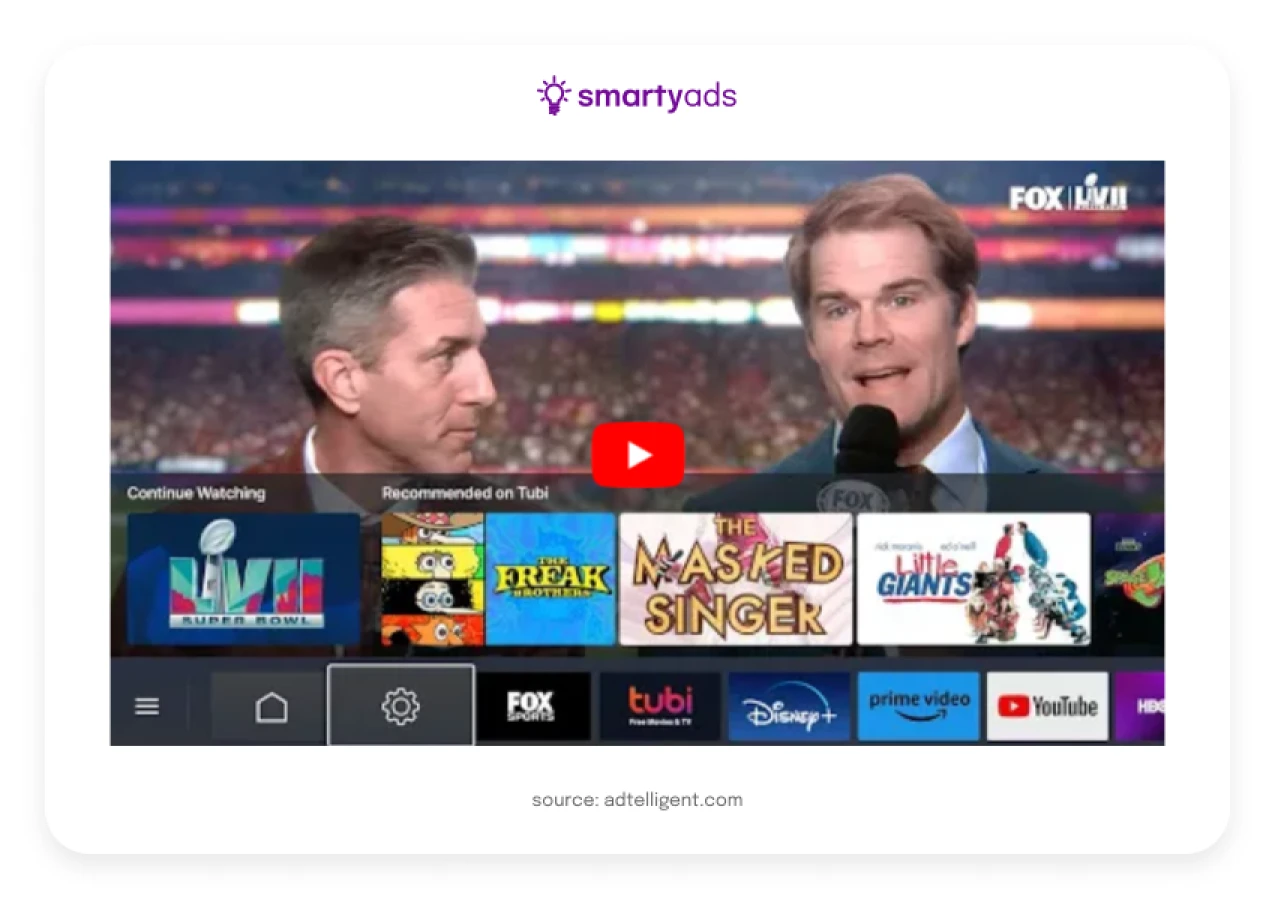
Live sports and streaming Events
Live sports is leading among trends in CTV ads. Live content remains one of the strongest environments.
Why it works:
- High attention levels
- Real-time viewing
- Emotional engagement
- Shared cultural moments
Because users are fully engaged, brands get higher impact compared to regular streaming content.
Cross-screen strategy
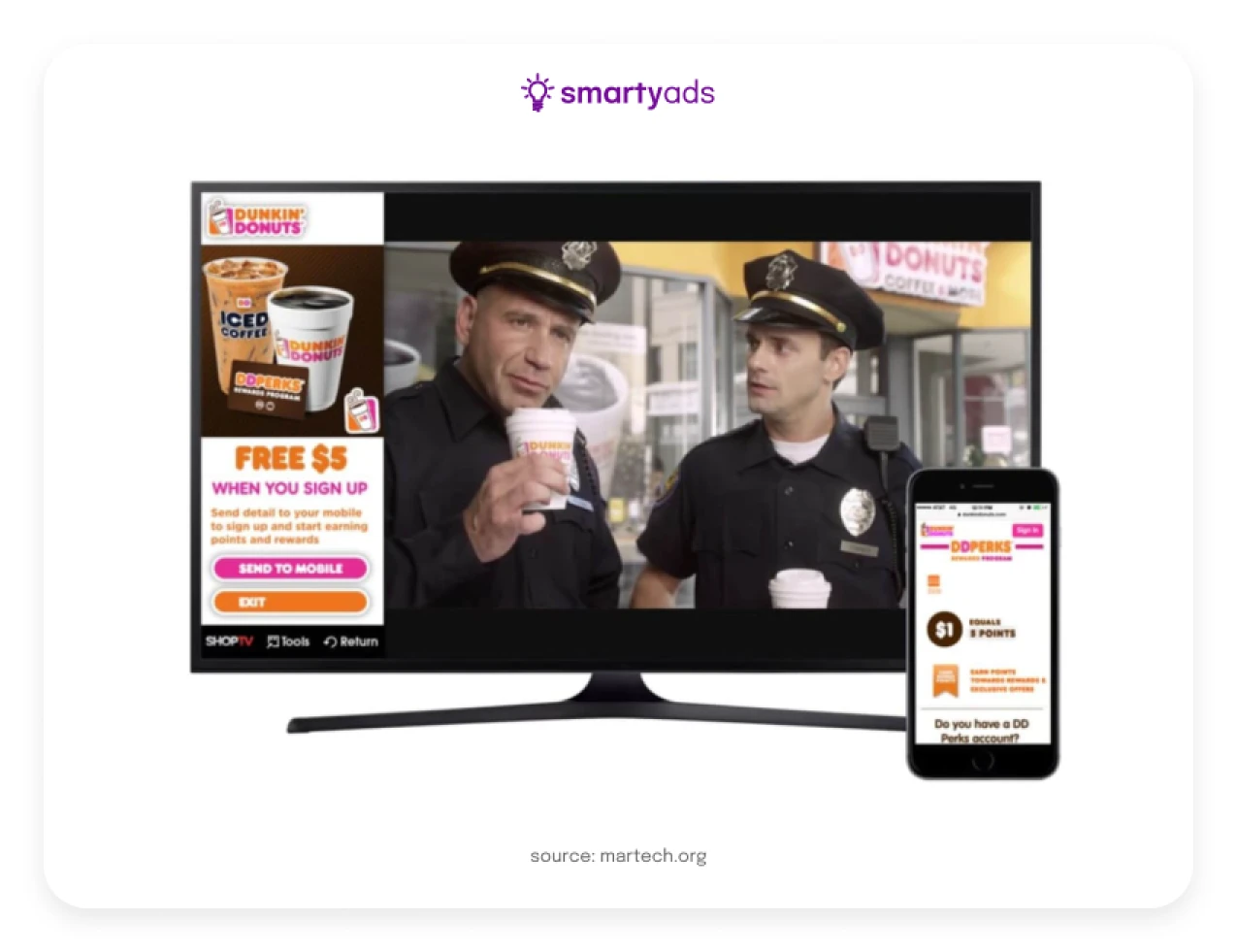
CTV is no longer a standalone channel. Brands now build full journeys across devices:
- TV for attention
- Mobile apps for interaction
- Desktop for conversion
This creates a connected funnel where each screen plays a role in the final outcome.
Home screen advertising
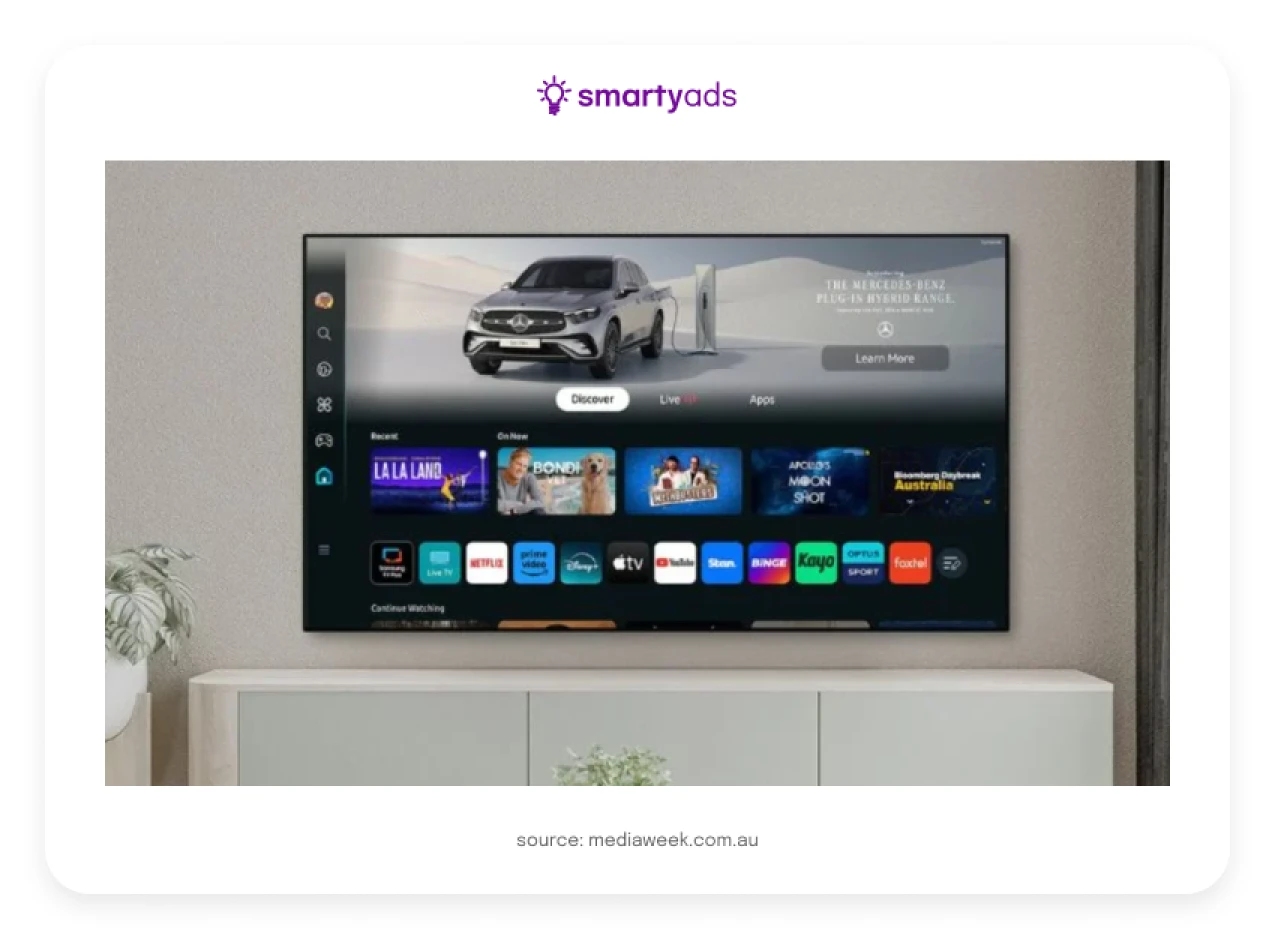
Connected tv ads trends also include home screen commercials. Home screen ads on Smart TV are one of the most valuable placements.
They appear:
- Immediately after turning on the device
- Before content selection
- In a moment of full attention
This makes them powerful for brand visibility and early influence in the viewing journey.
Find more CTV interactive examples in our previous articles.
How to launch a CTV advertising campaign
A modern CTV campaign can be structured around five basic steps:
- Define the campaign goal — awareness, traffic, installs, or conversions.
- Choose your audience — use relevant demographic, behavioral, contextual, or first-party signals.
- Select formats and inventory — choose CTV placements that match your campaign objective.
- Launch programmatically — set your budget, targeting, and bidding parameters.
- Monitor and optimize — track reach, engagement, conversions, and other performance signals.
A programmatic DSP can bring these steps together in one workflow, making it easier to manage CTV campaigns at scale.
Conclusion
CTV trends are booming thanks to numerous static and interactive formats. Plus, this medium is now organized and focused on results. Advertisers want results, better ways to measure success and stronger connections to other devices. They strive to address their audiences in a meaningful way.
The ecosystem is becoming more controlled and data-driven with platforms handling both ad space and audience information. At the time AI and automated systems are making ad campaigns more efficient and responsive.
The result is simple: It is no longer just TV advertising online. It is becoming a full performance ecosystem connected to real business results.
FAQ
CTV advertising trends this year vary, they are focused on inventing new, more efficient ways to measure performance and KPI. This medium is now performance-driven, not just awareness-driven. Another big trend is AI optimization and cross-device tracking proliferation.
Connected tv advertising trends influence media buyers in many different ways. Most important of them – advertisers now need to span their reach outside of TV only. With this medium they can also present their messages on mobile apps. This all makes data integration very convenient.
Desire for clearer ROI is stirring trends. Advertisers today pay more and spend more budgets, so they naturally want to pay attention to metrics like CAC, ROAS. Real actions of users are also becoming important.
The right platform depends on your campaign goals, target audience, inventory needs, and measurement requirements. A DSP can be useful when advertisers need programmatic buying, audience targeting, and campaign optimization across CTV inventory.
Programmatic CTV uses automated technology to buy connected TV inventory based on campaign targeting and bidding parameters. This allows advertisers to reach selected audiences without negotiating individual placements manually.
Yes. CTV campaigns can be evaluated using metrics such as conversions, installs, CAC, ROAS, and post-view actions. However, measurement methods vary across platforms, so advertisers should define KPIs and attribution methods before launching a campaign.