Nowadays, algorithms can optimize campaigns aimed at installing apps, actions inside an app, and attract people who spend more inside the application. Advertising campaigns dedicated to app and mobile promotion can be created via Google Ads, Meta Ads, and many other major ad venues.
There are many ways to attract users on mobile — from word-of-mouth marketing and incentivized traffic to app store advertising, contextual campaigns, and targeted social media ads. In this article, we’ll explore mobile marketing examples, we’ll also review why digital advertising matters for mobile apps, how mobile ad campaigns work, and how to select the right format just for your goals.
Key Takeaways:
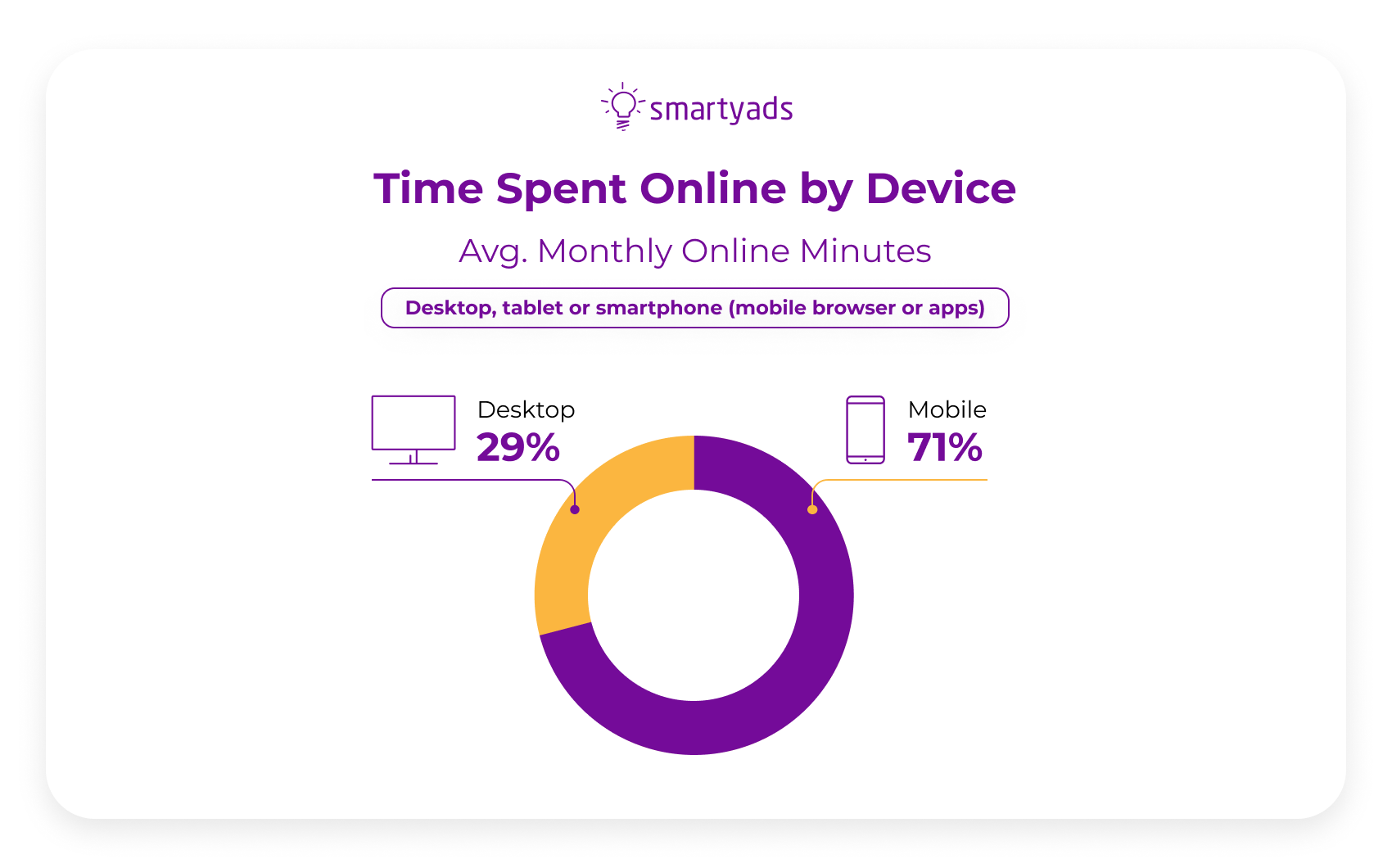
- Normally users spend around 70% of their time on mobile devices. At the same time, as you might guess, every mobile phone gives a chance to launch impressive mobile advertising campaigns.
- For mobile campaigns to be successful, they should emulate actual usage patterns of smartphones rather than just downscale desktop advertisements.
- Interactive ads like playable ads, surveys, and augmented reality ads tend to engage users more than static ads.
- Success generally stems from a combination of creativity, personalization, context targeting, and rapid optimization.
- Campaigns use different media forms depending on their goals; video and rich media are best for awareness purposes. Messaging and personalization are ideal for retention/conversions.
- The most successful campaigns minimize steps. The lesser the number of clicks needed to go from intent to conversion, the more successful the campaign will be.
What are mobile advertising examples
There are examples of mobile marketing, which consist of advertisements that are delivered to mobile devices such as phones and tablets via applications, websites for mobiles, search engines, social media feeds, messengers, QR codes, and in-app advertisements. These ads could take different forms from video ads that are found in social stories to banner ads.
Good ads are wrapped around the screen sizes.
Most interactions with a smartphone happen using fingers. This means that a good mobile phone ad should look more natural than a forced adaptation of a desktop ad campaign.
They are also focused on user behavior.
Good smartphone ads are designed around touch behavior, scrolling patterns, and instant loading. They are also made for short attention windows. Some require the user to perform swipes or touches, whereas others utilize camera, movement, or geolocation information to provide a much deeper experience. Brands also experiment with multiple formats depending on intent. Some use lightweight mobile banner ad examples for broad reach. Others create a richer experience by using interactive mini-games or placing ads based on incentives.
Mobile advertising market today
Native advertising, banners, interstitials, videos, rich media, push and pop ads – there are plenty of opportunities to feature your brand. Thus, the market is booming.
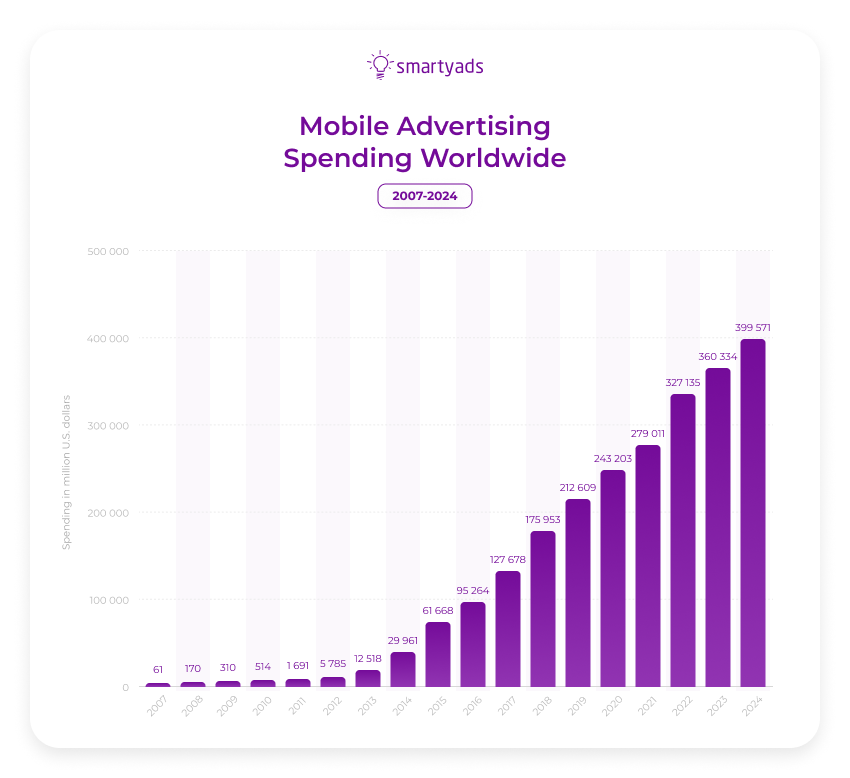
The global ad tech software market accounts for $16.27 billion and is projected to hit the bar of $29.85 billion by the end of the year. No wonder that the number of available advertising solutions is constantly growing. But what do the stats say about mobile advertising in particular? According to Statista, global ad spending in the mobile niche reached billions during the past couple of years. As you can see from below, we have pretty great predictions – in four years, the mobile advertising market is expected to increase fivefold.
Why mobile apps and web experiences are trending
As we’ve already seen from the picture above, the future of mobile ads is quite bright. Mobile marketing strategy can be wrapped around different formats and environments. Still, we need to understand why exactly they are trending (aside from the fact that more than 70% of user attention actually belongs to their gadgets).
As such, mobile-first formats naturally work better with consumer engagement.
Vertical video aligns with smartphone usage habits. Interactive questions make more sense as part of a story rather than a display. Playable ads engage users while browsing idly. Augmented reality filters make the camera an advertisement rather than a neutral observation space.
This explains why brands keep embracing:
- snackable video content;
- touch-based interaction;
- reward-driven engagement;
- native in-feed placements;
- location-aware experiences;
- conversational messaging campaigns.
Types of mobile advertising formats
Mobile advertising normally generates $230B in ad spend for advertisers and for this reason, advertising formats grow more popular each year. So, let’s see what type of mobile phone advertisement is currently trending to understand if it suits your campaign.
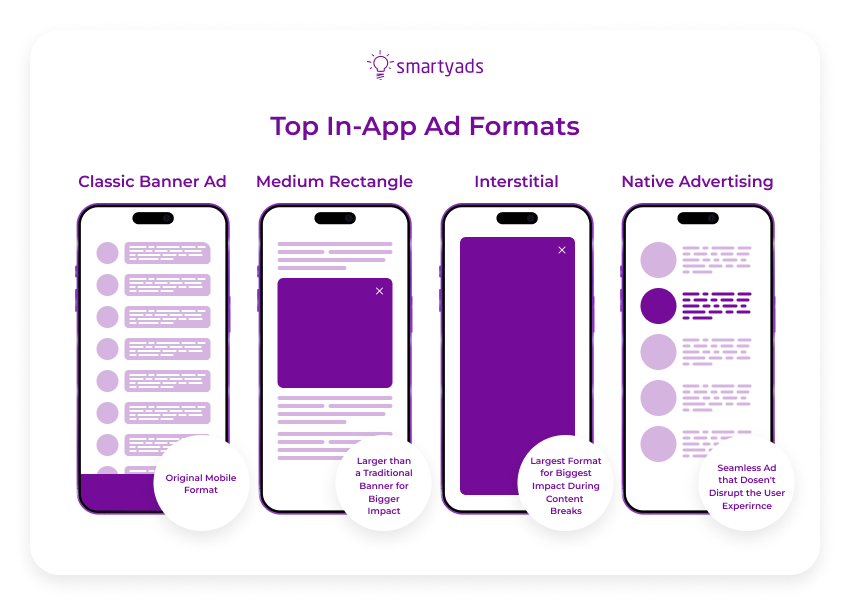
Mobile Banner Ads
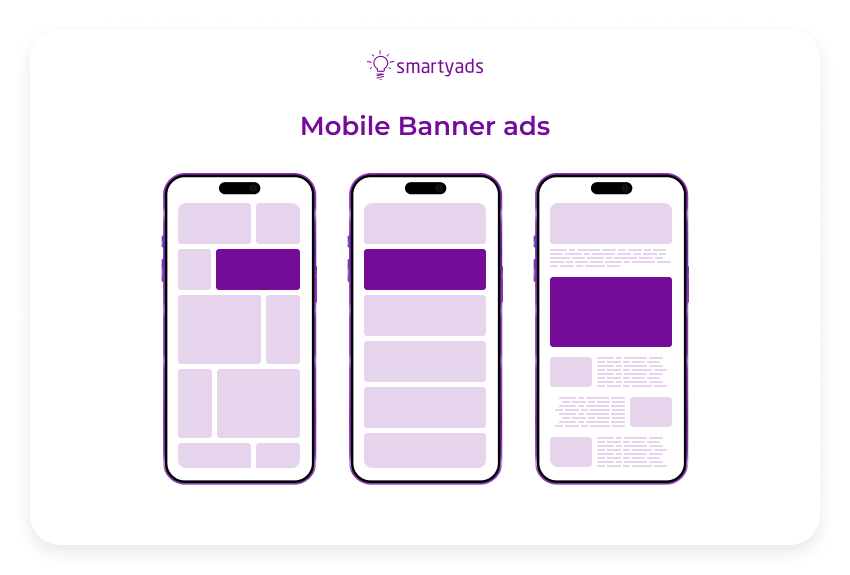
Banners continue to be among the most recognized ads in mobile advertising because it is believed that these units are best for brand awareness.
They tend to be placed within apps or on mobile websites as still or moving elements that attract attention but not in a disruptive way.
Effective banners have simple images, one key idea, and brief call to actions. The more info you try to pack onto such small screens, the less successful banners tend to be. On mobile, clarity wins as ads adapt to mobile ad sizes.
Examples of mobile banner ads include banners that incorporate animation to create movement while keeping it restrained. Other examples include banners that employ high contrast colors and little text.
Mobile Video Ads
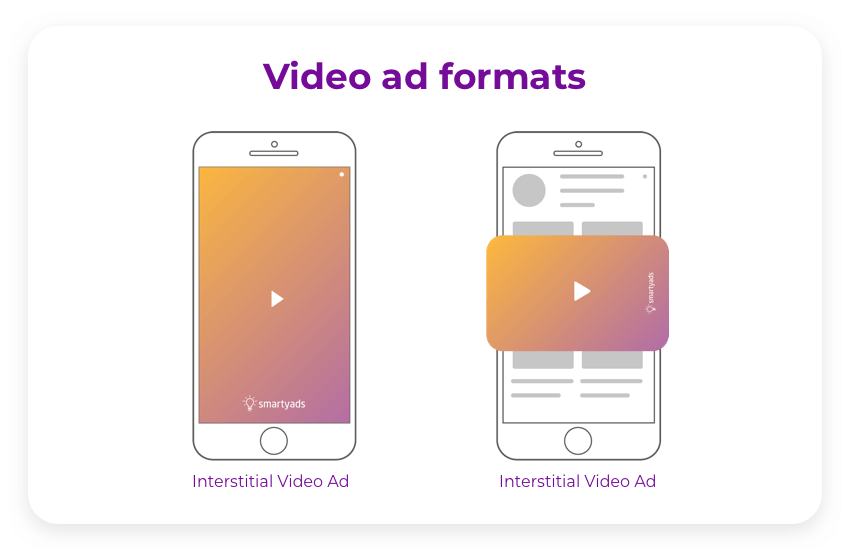
Mobile video advertising is also booming, especially when it comes to interstitial advertising. The short form video is the dominant mobile format due to its resemblance of the way in which content is consumed by individuals. The fast pace, captions, the vertical orientation of the video, and compelling opening seconds enable the campaign to withstand the endless scroll.
Some videos may have a story-like narrative whereas others serve the purpose of product demonstrations. An effective video for mobile does not dilly-dally. When the video feels boring from the get-go, the viewer moves away before they receive the message.
Push Notifications
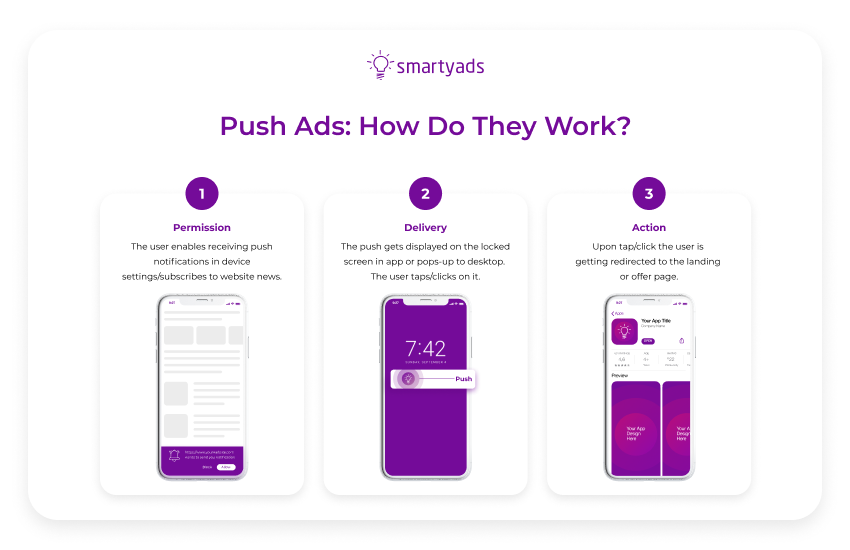
Notifications can be seen as direct prompts that reach users via lock screens or application pages. This is how businesses remind their customers about unfinished transactions, loyalty deals, special campaigns, or simply prompt action on their part.
A bad implementation of notifications makes them seem like a knock at one's front door every five minutes. However, the right time and approach make them look like helpful shoulder taps.
The most important thing is always relevance; notifications connected to certain actions or behaviors work much better than generic ones sent to everyone without any consideration.
In-App Ads
In-app advertising refers to ads placed inside mobile apps. These may be interstitial ads, rewarded video ads, native feed ads, or sponsored content.
In-app ads make good use of contextual targeting since the users are involved in one particular activity. For example, someone playing mobile games will react differently from one who is reading finance-related articles or listening to exercise music. This is why rewarded ads are also popular.
Most advertisers prefer placing their ads within the in-app medium as they involve both measurable user engagement and high levels of attention, unlike crowded desktop-based sessions.
Mobile Search Ads
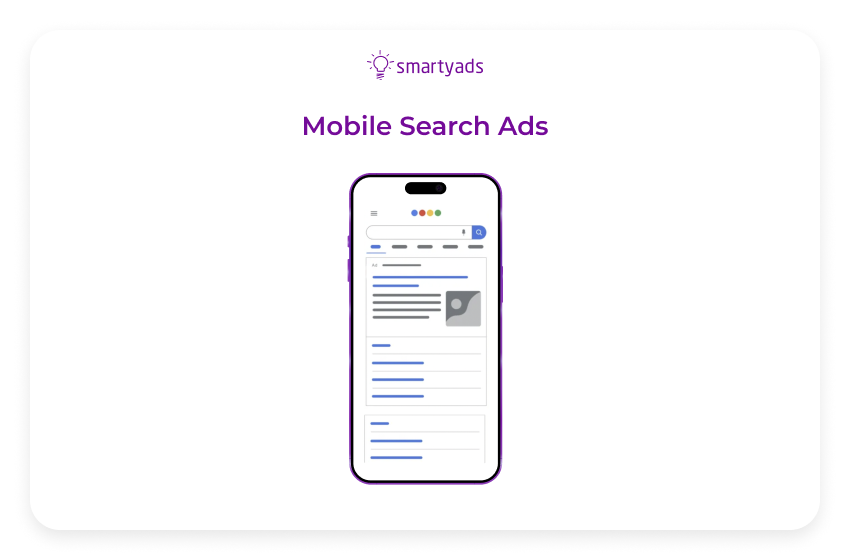
With search-based campaigns, (advertisement on mobile phone in english) you engage people with intent. You find a person who is looking for something—be it a pair of shoes, a hotel room, or food delivery services.
This means that search ads tend to do better when it comes to conversion rates. They do not bother anyone by interrupting their leisure time; they satisfy someone’s active demand.
The same goes for campaigns in the app store search.
SMS, RCS, and WhatsApp Mobile Ads
The advantage of messaging apps is the creation of channels of direct communication between a brand and consumers. Although traditional SMS works perfectly as a means of sending out notifications and promotional messages, newer messaging platforms using either RCS or WhatsApp include such features as imagery, buttons, carousels, and various forms of interactions.
The issue lies in moderation. Since messaging is always personal in nature, doing this too frequently would tire consumers down.
Those campaigns that perform well usually provide some type of value to consumers in exchange – whether it is coupons, shipping notifications, recommendations, or something else.
Geo-Targeted Smartphone Advertisement
Targeted location-based marketing uses geofencing technology or proximity alert methods for reaching out to people close to the venue.
Location marketing proves effective in particular when applied by restaurants, retail shops, entertainment venues, or local businesses because they are able to combine digital communication with practical actions.
The moment you receive an offer for a discount on your cell phone while approaching the venue creates a whole new experience compared to receiving the same information a few hours later from the comfort of your own home.
AR, QR, and Playable Mobile Ads
Interactive approaches make it increasingly difficult to separate promotion from entertainment.
Through the use of phone cameras and filters, AR makes users part of the branding experience. The offline world becomes directly connected with the online world through the QR codes.
In this manner, interactive marketing becomes more entertaining as people can test the characteristics of products, as well as entertain themselves while browsing the website.
Mobile campaign examples brands can learn from
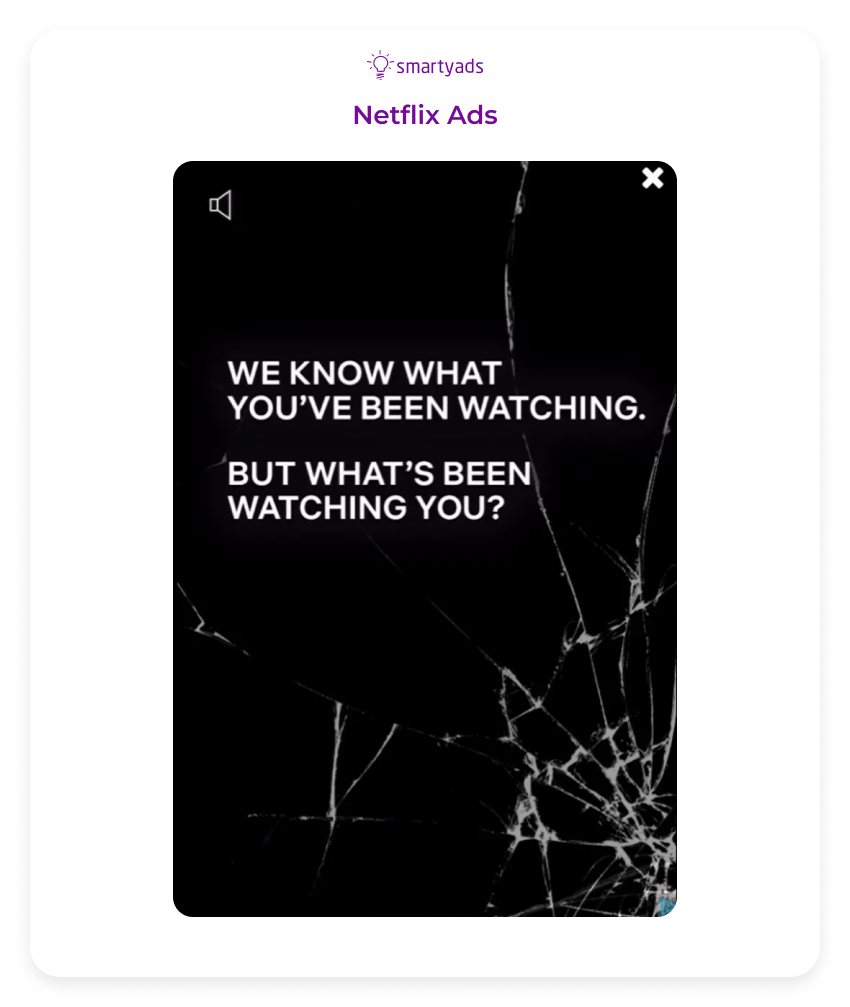
Netflix Interactive Banner Experience
Action taken by the brand: Netflix changed the conventional approach to a smaller story experience aligned with the tone and visuals of one of its shows. The users were provided with expanding elements, through which they could discover further scenes.
Why this approach worked: Unlike most advertisements that disrupt the browsing process, this one encouraged exploration without making people feel as if it was irrelevant to the context of the program.
Takeaways for other marketers: Interactive experiences will always be more engaging if they make sense within the narrative context.
Metrics to measure: Rate of expansion, engagement rate, click-through rate, average interaction time. You can also do it on a demand-side platform.
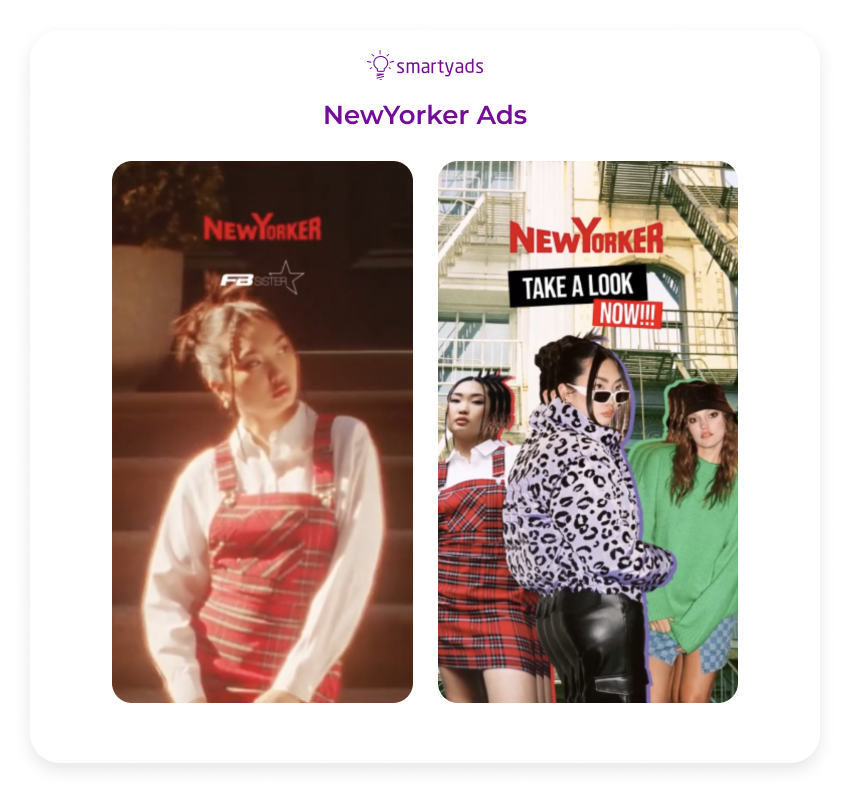
New Yorker Short-Form Video Campaign
Format used: Vertical social-feed video.
What the brand did: The publication adopted the pacing and editing style common on short-video platforms, using captions, fast transitions, and platform-native visuals.
Why it worked: The creative blended naturally into the feed instead of looking like a repurposed television commercial. It spoke the visual language audiences already consume daily.
What marketers can learn: Mobile viewers decide quickly whether content deserves attention. Fast pacing and platform-native formatting matter.
Metrics to track: Completion rate, shares, engagement, view-through rate, recall lift.
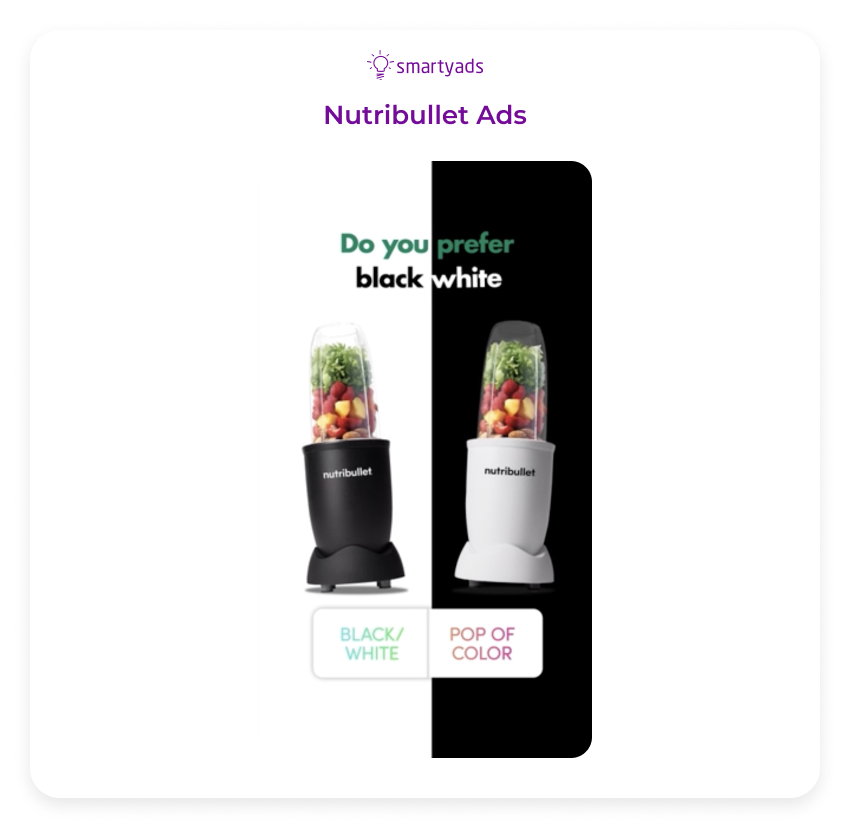
Nutribullet Interactive Poll Ad
Format used: Poll placement within a story.
What the brand did: Consumers were encouraged to choose between different flavors and recipes using an easy-to-use poll.
Why it worked: The engagement required minimal effort. One click was enough to change the consumer from a spectator into an actual participant.
What marketers can learn: This one is especially memorable among mobile app advertising examples. Brands could use polls not only for engagement but also to conduct audience research at low cost.
Metrics to track: Engagement rates, swipes, conversions.
Sony Pictures Playable App Campaign
Format used: Game element embedded in trailer.
What the brand did: The company launched an interactive mini-game that would unlock extra material for the user to watch before the trailer.
Why it worked: The marketing campaign allowed people to spend more time interacting within the universe of the brand.
What marketers can learn: People will have better recall as they will emotionally invest in the game through interaction.
Metrics to track: Session duration, interaction rate, completion rate of the trailer, and post-clicks.
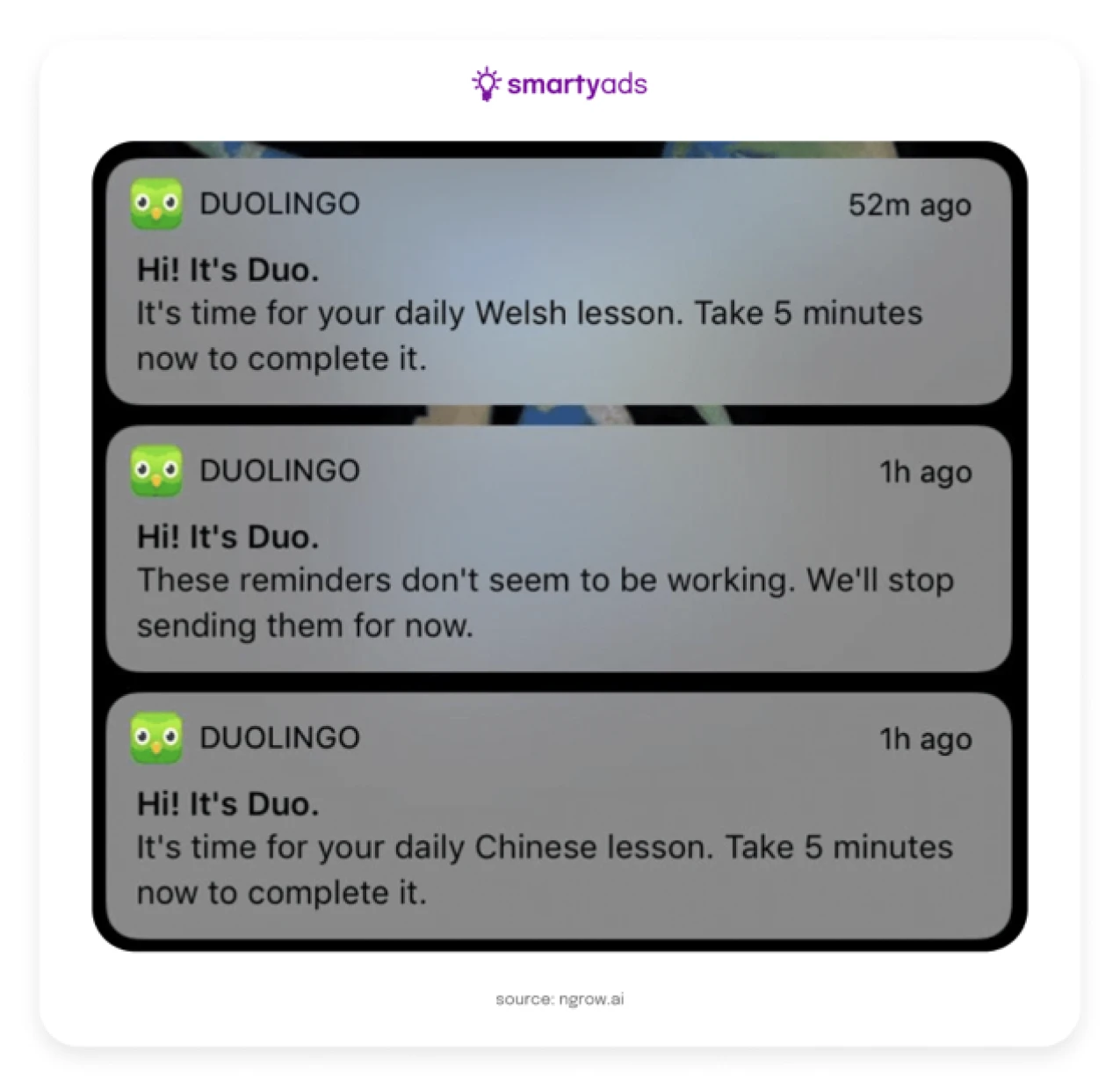
Duolingo Personalized Push Strategy
Format used: Duolingo used reminders based on the learning streak, behavior of users, and the time when they preferred studying.
What the brand did: The reminders seemed more aligned to one’s own objectives than a general advertisement.
Why it worked: They functioned almost like coaching, not marketing and achieved impressive results.
What marketers can learn: Behavioral personalization works much better for getting users back than scheduling.
Metrics to track: Open rate, number of returns, retention gains, reactivation.
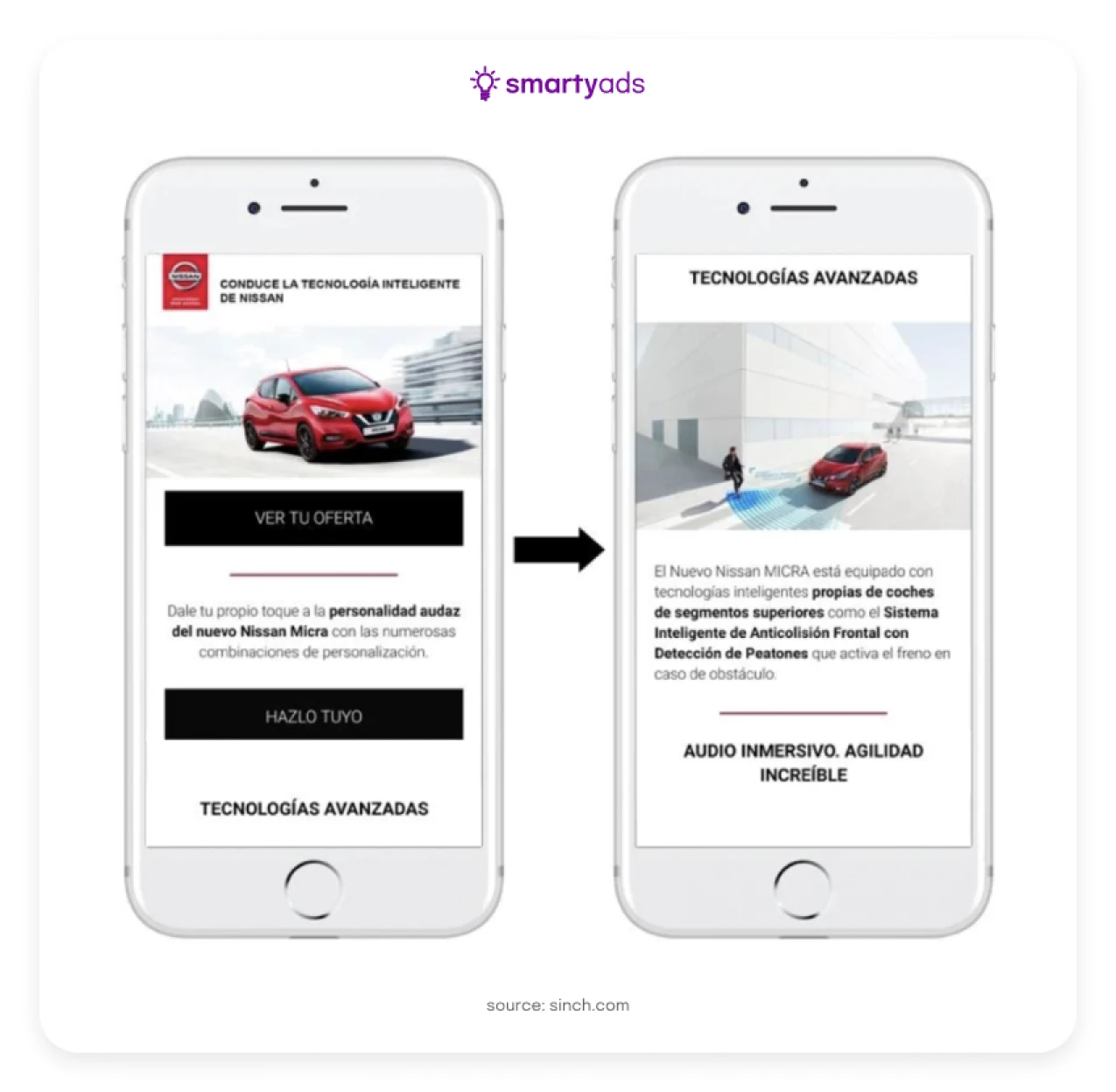
Nissan Rich Messaging Campaign
Format used: Multimedia SMS and RCS experience.
What the brand did: Nissan combined vehicle visuals with dealer directions and simplified financing tools inside a mobile message.
Why it worked: The campaign reduced friction between interest and action. Users could move from curiosity to dealership navigation in just a few taps.
What marketers can learn: Shorter customer journeys often produce stronger conversion rates.
Metrics to track: Click-to-location rate, lead submissions, CTR, dealership visits.
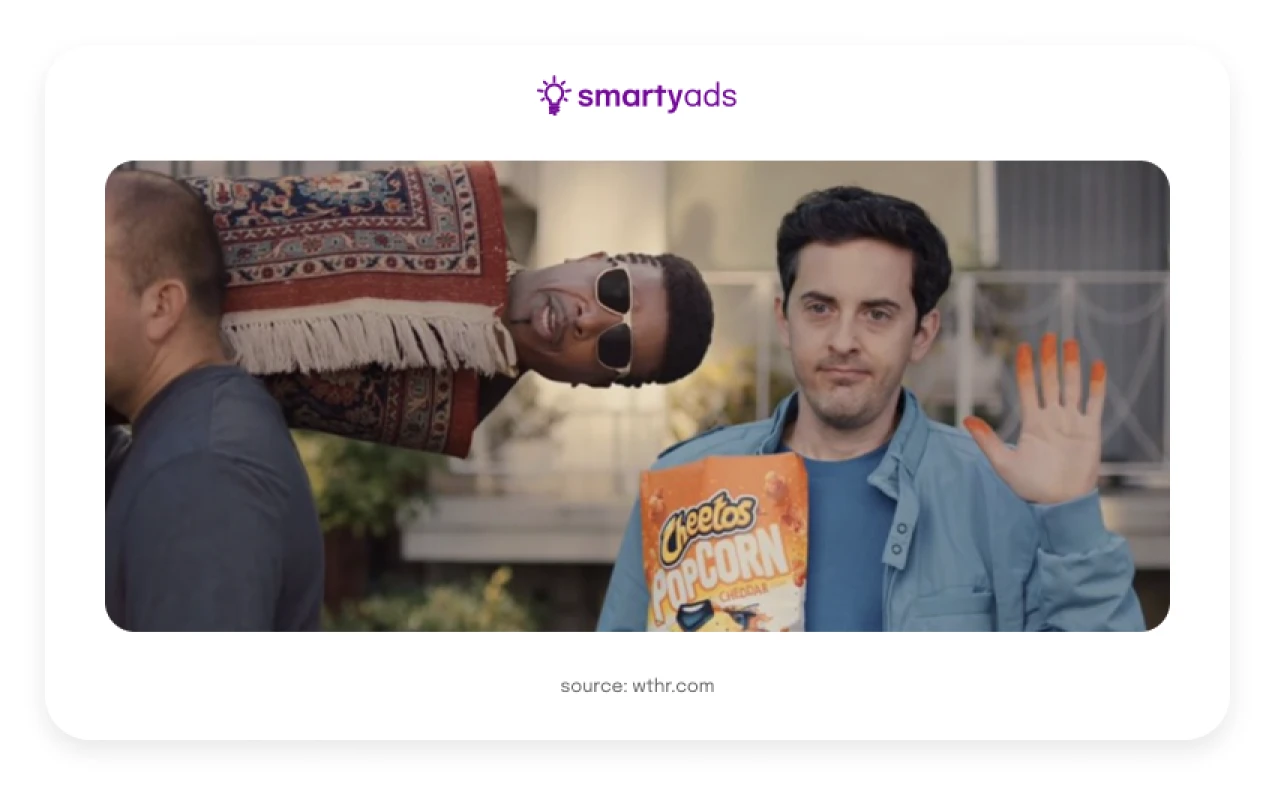
Cheetos AR Filter Campaign
Format used: AR camera lens.
What the brand did: Consumers could add fun brand elements and upload custom images via social media channels.
Why it worked: It made the process enjoyable and helped consumers share content without using aggressive marketing techniques.
What marketers can learn: Shorter customer journeys often produce stronger conversion rates.
Metrics to track: Number of shares, number of impressions, hashtags and lens time.
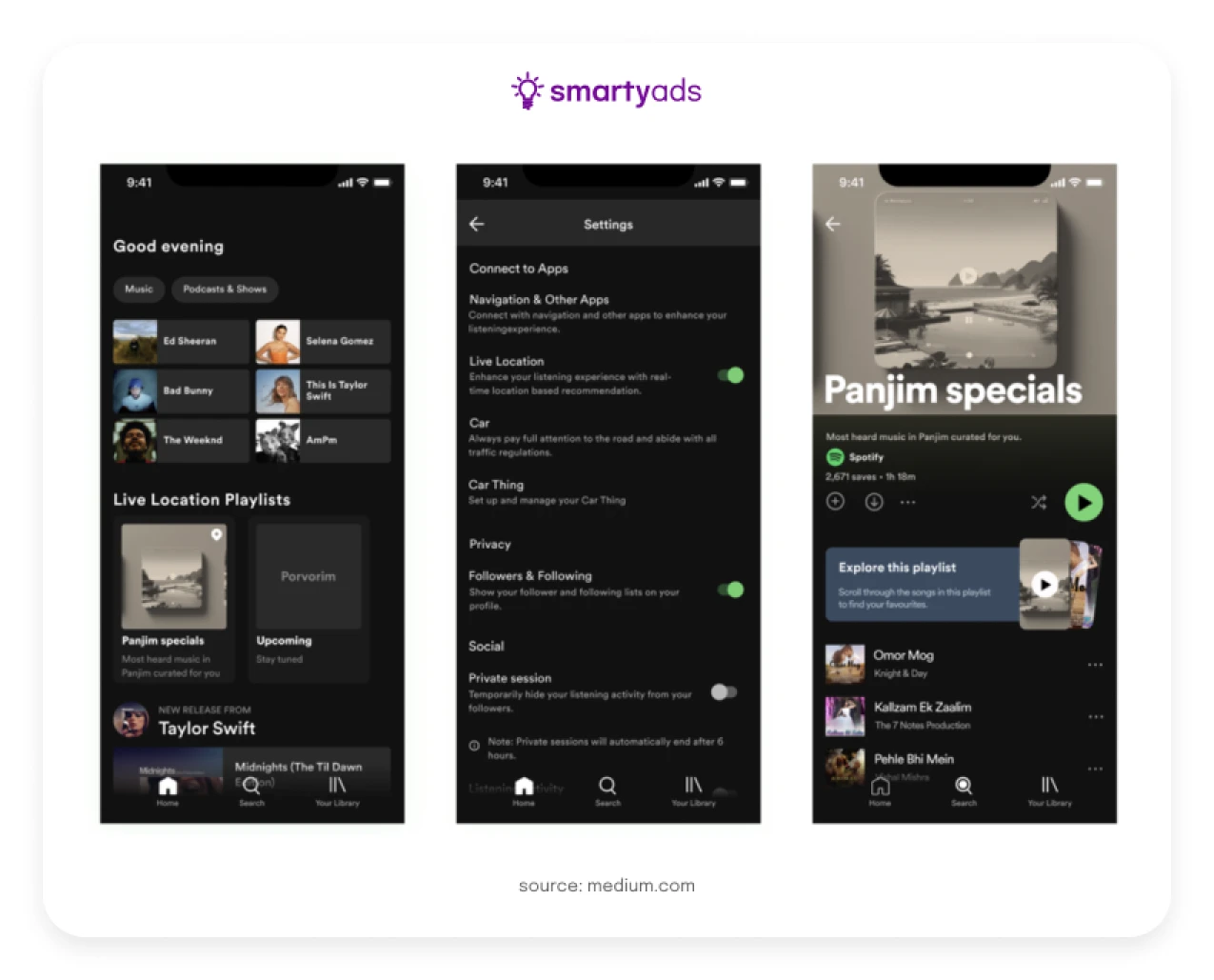
Spotify and RXBAR Audio Partnership
Format used: Audio spots combined with native display ads.
What the brand did: Healthy snack ads ran in exercise playlists with relevant visuals in the app.
How it worked: It appealed directly to consumers’ state of mind at the moment – fitness enthusiasts with thoughts on health and routines.
What marketers can learn: Shorter customer journeys often produce stronger conversion rates.
Metrics to track: Reach, lift in brand recall, use of coupons, post-spot behavior.
Mobile marketing examples by campaign goal
Mind that while choosing a creative you need to focus on brand objectives, they are even more important than creativity and design.
Brand Awareness Campaigns
For brand awareness campaigns visibility and general engagement are important. Choose rich media units, vertical ads and AR lenses. Also use in-app audios. Netflix, Cheetos, Spotify, and the New Yorker were among those brands that strengthened recall with such units. Track reach, impressions, recall of the brand.
Mobile App Advertising Examples for Engagement
These kinds of campaigns generate interaction. Playable placements as well as in-app and pushes are best for it. Use also social polls and recommendations. Duolingo and Nutribullet, along with Sony Pictures, used it. Track KPIs like sessions, retention, push open rate, interactions.
Phone Advertisement Examples for Retention
If you want to attract new users or keep existing ones, use SMS reminders, RCS receipts, push campaigns and personal recommendations. Nissan demonstrated how to make decision making a shorter path, while still keeping the relevance. Track repeated purchases, retention, churn, and conversions, as well as LTV.
In-App Advertising Examples for Conversions
The ads in this case should match the immediate desire of users. Rewarded videos with discounts will work best. Native feeds and sponsored content will also work wonders. As well, use interactive product demos. Examples of brands that we reviewed highlight how brands effectively minimized the number of steps to achieve conversions. Track CTR, app installs, sign-ups, ROAS, cost per acquisition.
How to choose the right mobile ad format
If you need to select the right ad format for your goals, then remember to keep in mind where your audiences spend time. Also, take into account their entire path from attention to action.
- Awareness goals require video campaigns, banners, AR, and immersive units.
- If your goal is engagement then aim for polls, playable advertising, rewarded, interactive.
- Push better serves for retention, as well as SMS flows, or lifecycle campaigns.
- Search placements and app store advertisements will best suit high intent traffic.
- For local promotions use QR activations, and geo-targeting. As well, use map integrations.
- For conversions use retargeting, personalized offers, and contextual ads.
Plus, you need to take into consideration such factors as budget and campaign goal to select the right option. Plus, mobile devices are good for capturing event-level data. This gives you even more freedom to analyze user behavior and then timely change campaign flow.
Takeaways
The most effective mobile phone advertisement units go beyond simply taking up screens. Rather, they fit into users' behavior, eliminate friction, and facilitate interaction within their environment. To choose the right one, you need to focus on your goals, remember about user behavior, personalization, platform capabilities, and how well each format performs for each goal.
Programmatic advertising platforms, like DSPs, represent such technologies, as they can serve campaigns across channels, formats and types of mobile devices. If you are planning to launch an effective mobile ad campaign, learn who your audience is, select the format that naturally amplifies your message.
Launch high-quality and creative mobile advertising with SmartyAds DSP!
FAQ
Mobile advertising is a type of advertising that is related to showing ads on smartphones and tablets. It also includes apps, mobile websites, search engines. It may also include messaging platforms, streaming services, and social environments.
Successful marketing initiatives integrate elements of both mobile-first and interactive or contextual design. Marketing strategies that perform well include playable ads, vertical videos, AR filters, native ads, and targeted messages.
Interactive experiences focus on engagement rather than just consumption. In-app advertising examples of the kind include polling, swipe content, incentivization, and games provide participants with actions to perform that could boost their engagement time and levels.
Campaigns that perform well typically have a clear goal, strong targeting, native creative, personalization, and optimization. This means relevance is more important than creativity.
Yes. There are many mobile app advertising examples and options that do not require expensive corporate budgets to implement. Even low-budget options such as messaging, local targeting, or basic interactive creative can deliver excellent results.
Placements on search engines, personalization of in-app offers, retargeting campaigns, and native shopping experiences have proven to work well since these ads target consumers at the time of their decision.
Begin with what your goal is, try out one or two of the options, and measure performance. Then, for your smartphone advertisement, you need to scale those that demonstrate measurable engagement or conversion.
.webp)